
Legacy Is Not a Postscript
Searching for better conversations

I saw Leaving a Legacy mentioned on a few Bitcoin podcasts and it is the current book for Jor’s book club.
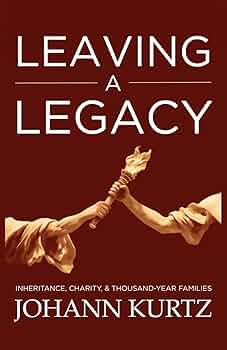
I’ve been in search of better conversations lately.
On page five there is a line that stopped me:
Giving at death is not a joyous act; it is an act of resignation.
That line does not flatter anyone.
It suggests that what we call generosity might just be delayed surrender.
The default setting in modern life is simple: accumulate, protect, optimize, insulate. Hold everything tightly “just in case.” Then, once you are safely dead and no longer need any of it, distribute what remains.
We call that virtue.
But what does it really cost you to give away money you cannot possibly use?
A promise to donate everything at death is not sacrifice. It is accounting.
It allows you to keep full control while alive. Full optionality. Full insulation. And then, once the risk is gone, you allow redistribution.
That is not generosity in the human sense. It is estate planning with good branding.
Now zoom out.
There is a parallel critique that modern charity itself is bloated, bureaucratic, impersonal. That foundations are inefficient middlemen. That once upon a time charity was local, embodied, relational.
Maybe. But nostalgia is cheap.
Let’s be careful not to romanticize the past.
Organized charity as we know it is relatively new. When it was run primarily through churches or local elites, was it truly more efficient? More transparent? Or was it simply smaller and harder to audit?
Every generation believes its institutions are uniquely corrupt.
What feels different today is not just bureaucracy. It is distance.
We have outsourced responsibility upward. We send money into systems so that we do not have to look suffering in the eye. We convert moral action into automated withdrawals.
That is not a failure of foundations. It is a failure of participation.
Underneath all of this sits a darker narrative.
Deaths of despair. Drug addiction. Mental illness. Falling birth rates. Collapsing home ownership. A civilization that cannot even convince itself it should continue.
Many Bitcoiners feel this deeply. The sense that something fundamental is decaying. That the culture has lost its center. That we are in late stage everything.
I understand the emotion.
But I question the framing.
It is dangerously seductive to believe you live at the end of an era. It makes you feel perceptive. It makes you feel like a remnant. It justifies withdrawal.
Look back two hundred years.
By nearly every measurable metric, life in the West is dramatically better. Longer lifespans. Less violence. Less infant mortality. More access to knowledge. More mobility.
We do not live in a dying civilization.
We live in a noisy one.
Change feels like decay when you are emotionally attached to a previous configuration of the world.
That does not mean there are no crises. There are. Real ones.
But panic is not low time preference. Panic is high time preference disguised as wisdom.
Legacy is not about hoarding until death.
Legacy is not about surrendering your estate to a foundation once you are safely beyond consequences.
Legacy is about acting while you are alive.
Funding things that matter to you while you can see them grow. Supporting people you can look in the eye. Building institutions you actually participate in.
If you believe culture is upstream of politics, then you do not wait for death to deploy your capital.
You deploy it now.
Not out of resignation.
Out of confidence that the future is worth investing in.
Can you be too low time preference?